
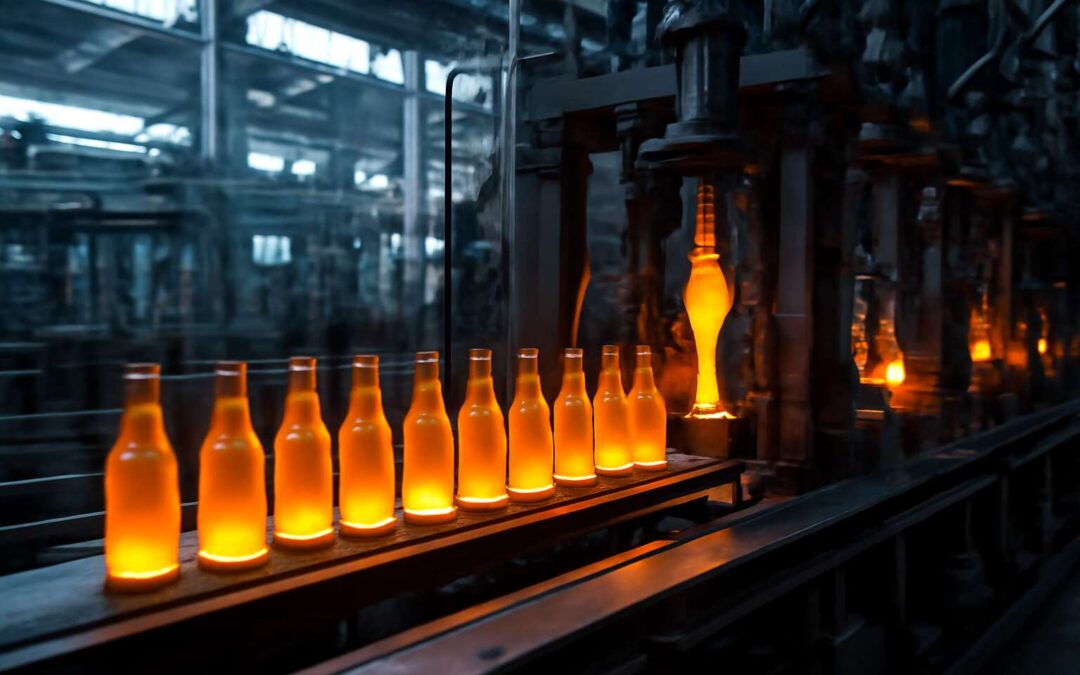
Global landscape of glass bottle production
Worldwide production regions for glass bottles
Global glass bottles move as if tethered to a quiet heartbeat, with more than 100 billion units produced each year. The map of their making reveals a global chorus of furnaces and finishers, and the question that lingers is where are glass bottles made.
Production centers cluster along four vast corridors: Europe, Asia-Pacific, the Americas, and the Middle East.
- Europe: Germany, Italy, France
- Asia-Pacific: China, India, Vietnam
- Americas: United States, Mexico, Brazil
- Africa and the Middle East: UAE, Egypt
For readers in South Africa, the narrative feels both global and intimate: local mills blend recycled glass with new batch to balance cost, energy use, and reliability, while cross-border logistics keep shelves stocked and brands confident.
Leading glassmaking nations and major factories
Across four vast corridors, more than 100 billion bottles roll off lines each year, and the question where are glass bottles made unfolds into a mosaic of furnaces and skilled hands. Leading nations—Germany, Italy, France in Europe; China, India, Vietnam in Asia-Pacific; the United States, Mexico and Brazil in the Americas; UAE and Egypt in Africa and the Middle East—host plants that turn sand and cullet into packaging. Major factories such as Owens-Illinois, Verallia, Ardagh Group, and Vitro shape the global glass bottle landscape.
- Owens-Illinois (O-I) – North America and Europe
- Verallia – Europe and Americas
- Ardagh Group – Global container glass
- Vitro – Americas and Europe
For South Africa, the map feels personal; local mills blend recycled glass with new batch to balance cost and energy use, while cross-border logistics keep shelves stocked. The question of where are glass bottles made echoes in planning.
Production capacity and market demand trends
Across the globe, more than 100 billion glass bottles roll from furnaces each year, a quiet blaze turning sand into stories. So, where are glass bottles made? The answer unfurls across continents—European workshops, Asia-Pacific powerhouses, and the Americas, with Africa’s growing mills adding a local cadence to the global chorus.
Production capacity now tracks demand with a measured heartbeat. China and India expand alongside the Middle East, while Europe and North America balance growth with cullet-driven energy savings and durable, lighter designs that travel longer distances without losing clarity.
In South Africa, the map grows intimate—recycled glass blends with new batch to trim energy use, and cross-border logistics keep shelves stocked in a tightly woven regional supply chain.
- Recycled content preserves material value
- Energy-efficient furnaces cut emissions
- Logistics networks sustain seasonal demand
Energy use, emissions, and environmental considerations
More than 100 billion glass bottles roll from furnaces each year, turning sand into stories. So, where are glass bottles made? Across continents—European workshops, Asia-Pacific powerhouses, the Americas, and Africa’s growing mills adding a local cadence to the global chorus. Energy use follows a measured rhythm, with cullet content and smarter furnaces trimming emissions while preserving clarity that travels the world.
- Recycled content lifts material value and reduces energy demand.
- High-efficiency furnaces cut emissions and fuel use.
- Streamlined logistics cut transport miles and keep shelves steady.
In South Africa, recycled glass blends with fresh batch, strengthening local supply chains and trimming energy bills. The global landscape remains a living glass poem, reframing production as a sustainable, shared craft.
Global supply chain factors in bottle manufacturing
More than 100 billion glass bottles roll from furnaces each year, tracing oceans and factory doors to land on shelves around the world. Curious minds ask, where are glass bottles made, and the answer reads like a global map. From Europe’s venerable workshops to Asia-Pacific powerhouses and the Americas’ dynamic mills, the landscape is a living atlas of craft and commerce. Smart cullet usage, efficient furnaces, and energy-smart logistics shrink footprints while preserving the clarity customers trust. From Cape to Copenhagen to Lagos, I trace trade winds and tell stories of design, durability, and drinkable clarity.
- Raw material sourcing and cullet availability
- Regional energy mix and emissions management
- Proximity to beverage brands, logistics networks, and packaging ecosystems
Across continents, global supply chains balance speed with stewardship, turning regional energy choices into cleaner bottling stories. In South Africa, global links meet local ingenuity, strengthening recycling streams and regional distribution.
Regional hubs and manufacturing sites
Europe’s glass bottle manufacturing centers
Ever wondered where are glass bottles made? In Europe, a tapestry of regional hubs fuels both high-volume output and craft-level detailing. From automated melting tanks to precision finishing, these centers balance tradition with speed, keeping production lines in step with global demand while serving nearby markets.
Key regional hubs include:
- Northern Europe: Germany, the Benelux corridor, and Denmark
- Central Europe: Czech Republic, Poland, Hungary
- Southern Europe: Italy and Spain
- Western Europe: France and the United Kingdom
These clusters translate into nimble logistics, shorter freight routes, and a steady supply for SA brands and global partners alike, a quiet orchestra of furnaces humming from dawn to dusk, guiding bottle shapes, neck finishes, and coatings toward efficiency and resilience.
Asia-Pacific production powerhouses
Folks curious about where are glass bottles made will find Asia-Pacific in the lead. The region’s production powerhouses fuse cutting‑edge automation with time‑honored glasscraft, turning heat and silica into uniform bottles with an almost ritual speed. Global demand for glass bottles climbs steadily, and Asia-Pacific’s share has grown with double-digit momentum over recent years.
- China—Guangdong and Jiangsu host vast megafactories turning raw materials into bottles at scale.
- India—Gujarat and Maharashtra drive mass production with regional clusters and supply chains.
- Japan and South Korea—high-precision glassmaking, robotics, and quality finishes under tight tolerances.
From these Asia-Pacific clusters, glass bottles are delivered with shorter freight routes and adaptable finishes for beverages and pharma—fueling global demand while quietly shaping regional commerce in South Africa and beyond.
North America and Mexican operations
North America anchors a dense network of glass bottle makers, from U.S. plants to Canadian corridors. These facilities blend automation with skilled glasscraft, delivering reliable bottles to beverages and pharma. For brands asking where are glass bottles made, the region’s near-market footprint shortens lead times and risk.
Regional strengths in North America hinge on scale, speed and logistics.
- Coast-to-coast distribution
- Automation-enabled lines
- Strong beverage and pharma partnerships
Mexico sits along fast lanes to Central America and Caribbean markets. Local plants support domestic brands and cross-border shipments, reinforcing North American resilience and delivering dependable packaging as demand grows in South Africa markets.
Middle East and other emerging sites
From the furnace of human ingenuity, the Middle East shines as a new beacon for glass bottle making. In the past year, regional capacity rose by nearly 25%, turning this corridor from Turkey through the UAE to Saudi Arabia into a fast-paced engine of supply. It fuses automation with time-tested glasscraft, shortening cycles and stabilizing supply for both beverages and pharma. The question where are glass bottles made finds its answer in this evolving web of regional hubs that balance scale with quality, knitting Africa and Europe into a resilient, near-shore network.
Emerging sites include:
- United Arab Emirates and Saudi Arabia — expanding float capacity and automation
- South Africa and Nigeria — investing in sustainable, high-speed lines
These hubs offer nearshore advantages for South Africa and neighboring markets, coupling energy efficiency with rapid turnarounds. They extend the reach of established plants and invite collaborations across the region, ensuring that the trusty, well-made bottles arrive where they are needed with minimal risk.
Sourcing bottles from Southeast Asia and neighboring regions
A vivid shift has taken place: nearly a quarter of global glass bottle supply now channels through regional hubs rather than distant mills. For many buyers, where are glass bottles made is no longer answered in a single furnace, but in a tapestry of proximity, partnerships, and nearshore networks. Southeast Asia and its neighbors loom large, feeding South Africa’s shelves with reliability while balancing cost, speed, and craft. This is the season when supply lines travel with the sun and stay a breath away from the market.
Regional hubs in Southeast Asia and neighboring regions blend automation with time-honored glasscraft, offering stable turnarounds for SA’s beverage and pharma players. The emphasis rests on energy efficiency, stringent quality control, and scalable lines that adapt to seasonal demand.
- Vietnam
- Thailand
- Malaysia
Materials, processes, and sustainability in glass bottling
Raw materials and batch formulation for glass
In glassmaking, the shimmer of the furnace hides a practical secret: cullet can cut energy use by up to 30%. That reality frames the question—where are glass bottles made—and how the batch travels from sand to shelf with minimal waste and maximum clarity.
Raw materials and batch formulation form the heart of the process. The typical base mix combines silica sand, soda ash, and limestone, with recycled glass (cullet) easing viscosity and lowering required heat. Here’s what often goes into the batch:
- Silica sand
- Soda ash
- Limestone
- Cullet (recycled glass)
In the furnace, this batch melts at high temperatures and is shaped by blow or press techniques. Sustainable practices arise from cullet adoption, energy recovery, and emissions controls—essentials for South Africa’s glass bottling sector where responsible supply chains matter as much as bottle quality!
Melting, forming, and finishing processes
Within the plant, materials mingle with a quiet precision: silica sand, soda ash, limestone, and recycled cullet. The cullet lowers viscosity and trims energy needs, preserving the clarity customers prize. The question many wonder echoes through the furnace: where are glass bottles made. It’s in sites that choreograph composition, heat, and timing with clinical grace.
Melting occurs in furnaces at blistering temperatures, forging a pristine molten stream that is then shaped by blow or press techniques. Neck finishing, annealing, and inspection seal the bottle’s destiny, ensuring uniform walls and a virtuous glow. Sustainability threads through every stage, from ongoing cullet adoption to energy recovery and emissions controls—vital for South Africa’s bottling sector where responsible supply chains ride alongside bottle quality!
- Melting with cullet
- Blow and press forming
- Annealing and finishing
Innovations in sustainability and recyclability
South Africa’s bottling floor hums with heat and precision. In our plants, craft meets calculation, and the question of where are glass bottles made becomes a practical matter of design and logistics. “Heat respects waste,” a veteran glassmaker likes to say, and I’ve watched the glow as we melt, shape, and anneal—keeping margins bright and bottles crystal-clear!
Materials and proportions steer performance: silica sand, soda ash, limestone, and responsibly sourced cullet blend for purity and energy efficiency. Recycled glass lowers viscosity and reduces emissions, a critical advantage on SA’s energy-challenged grid. The result is bottles that shine with clarity while treading lightly on the planet.
- Higher cullet content for lower energy demand
- On-site energy recovery from furnace exhaust
- Low-emission burners and closed-loop emissions controls
Energy efficiency and emissions controls in furnaces
In South Africa, the process that turns sand into shine is a study in precision and light. The question where are glass bottles made remains answered on the factory floor, where heat and patience coauthor every crystal-clear paragraph.
Materials and proportions steer performance: silica sand, soda ash, limestone, and responsibly sourced cullet blend for purity and energy efficiency. Recycled glass lowers viscosity and reduces emissions, a critical advantage on SA’s energy-challenged grid.
- Higher cullet content for lower energy demand
- On-site energy recovery from furnace exhaust
- Low-emission burners and closed-loop emissions controls
Energy efficiency and emissions controls in furnaces are the backbone of craft and commerce, quietly increasing the bottle’s brilliance. I’ve watched heat become humane—lean heat, careful heat—so every shine is a pledge to people and planet.
Quality assurance, standards, and testing
Materials shape destiny in the glass trade: silica sand, soda ash, limestone, and cullet blended for purity and energy balance. Higher cullet content lightens the furnace’s burden, trimming emissions while preserving shine. Across SA, recycled glass lowers viscosity and speeds melting.
The journey from sand to shine continues through melting, forming, annealing, and finishing—an arithmetic of heat in glass. On-site energy recovery, low-emission burners, and closed-loop controls pulse through the factory floor. The question where are glass bottles made sparks the answer on the floor.
Quality assurance, standards, and testing keep the bottle’s voice true.
- Inline visual, dimensional, and weight checks
- Leak, impact, and crown tests for seal integrity
- Batch traceability and compliance with ISO 9001 and SABS
These rituals ensure consistency, safety, and a future sprung from careful craft.
Industry players, supply chain dynamics, and market trends
Global glass bottle manufacturers and brands
Industry watchers marvel at the glass bottle market as a globe-spanning craft. The leaders—Owens-Illinois (O-I), Ardagh Group, Verallia, Vitro, and Vidrala—shape the supply map with steady, methodical skill. Curious minds ask where are glass bottles made, and the answer stretches from sunlit European mills to plants across the Americas, Africa—including South Africa—and Asia.
Industry players operate within a long, braided supply chain that prizes reliability and traceability.
- O-I, Ardagh Group, and Verallia drive global packaging capacity
- Vitro and Vidrala extend regional footprints in the Americas and Europe
- Regional cooperatives and niche glass specialists diversify the map
Market trends point toward lighter, more recyclable designs, regional manufacturing clusters, and smarter logistics that slash lead times. The bottle’s journey becomes a narrative of resilience as brands balance speed, cost, and sustainability in every run!
Private label and contract manufacturers
The question where are glass bottles made continues to reveal regional strength—from sun-warmed European mills to plants across Africa, the Americas, and Asia. A contemporary snapshot shows localized production shortening lead times and lightening carbon footprints.
Private label and contract manufacturers weave a reliable supply chain, turning spec into shelf-ready bottles while preserving traceability. In South Africa, partner mills align capacity with demand, color, and finish, creating a resilient local ecosystem.
- Regional flexibility
- Consistent quality assurance
- Optimized logistics
Market trends point to lighter designs, higher recyclability, and smarter logistics that shrink lead times. The journey remains a study in balance—speed, cost, and sustainability—framing the glass bottle as both craft and commodity!
Logistics, distribution, and lead times
Industry players in the glass bottle arena span private label mills and contract packagers who translate spec into shelf-ready reality. Their collaboration—balancing capacity, finish, and color—shapes a dynamic supply chain that keeps South Africa well supplied while inviting global expertise to the table.
- Localized production shortens lead times
- Transparent traceability from batch to bottle
- Flexible capacity matching demand and seasonality
Supply chain dynamics now favor regional circuits and near-shore partners. In this landscape, where are glass bottles made has moved toward a mosaic of hubs—from sun-warmed European mills to plants across Africa, the Americas, and Asia.
Market trends push lighter designs, higher recyclability, and smarter logistics that shave days from delivery windows. The journey remains a delicate balance of speed, cost, and sustainability—the glass bottle as craft and commodity, moving with purpose through South Africa’s distribution networks.
Packaging regulations and compliance
A mosaic of regional hubs now answers where are glass bottles made, from European mills to plants across Africa, the Americas, and Asia. Industry players—from private label mills to contract packagers—translate spec into shelf-ready reality. Their collaboration—balancing capacity, finish, and color—keeps South Africa supplied while inviting global expertise. “Speed is craft,” a regional leader notes, shaping every melt to bottle.
Supply chain dynamics favor near-shore circuits and localized production. Localized production shortens lead times; transparent traceability from batch to bottle; flexible capacity matching demand and seasonality.
- Private label mills
- Contract packagers
- Regional partners near SA
Market trends push lighter designs, higher recyclability, and smarter logistics that shave days from delivery windows. Packaging regulations in South Africa emphasize traceability, labeling accuracy, and responsible design, with oversight from SABS and environmental authorities. The journey remains a delicate balance of speed, cost, and sustainability.
Market trends and technology shifts in the glass bottle sector
Across a mosaic of regional hubs, the question where are glass bottles made becomes a map of networks. Industry players—from private label mills to contract packagers—coordinate melts, finishes, and colors with South Africa in mind, yet lean on global expertise.
Supply chain dynamics favor near-shore circuits and localized production. Near-shore plants shorten lead times, improve traceability from batch to bottle, and offer flexible capacity that meets demand and seasonal swings.
- Near-shore production
- Transparent traceability from batch to bottle
- Flexible capacity aligned to demand
Market trends push lighter designs, higher recyclability, and smarter logistics that shave days from delivery windows. Packaging regulations and consumer demand push innovations in digital QA, recycled content, and modular furnace setups that shape where glass is made, and how it travels to shelves.