
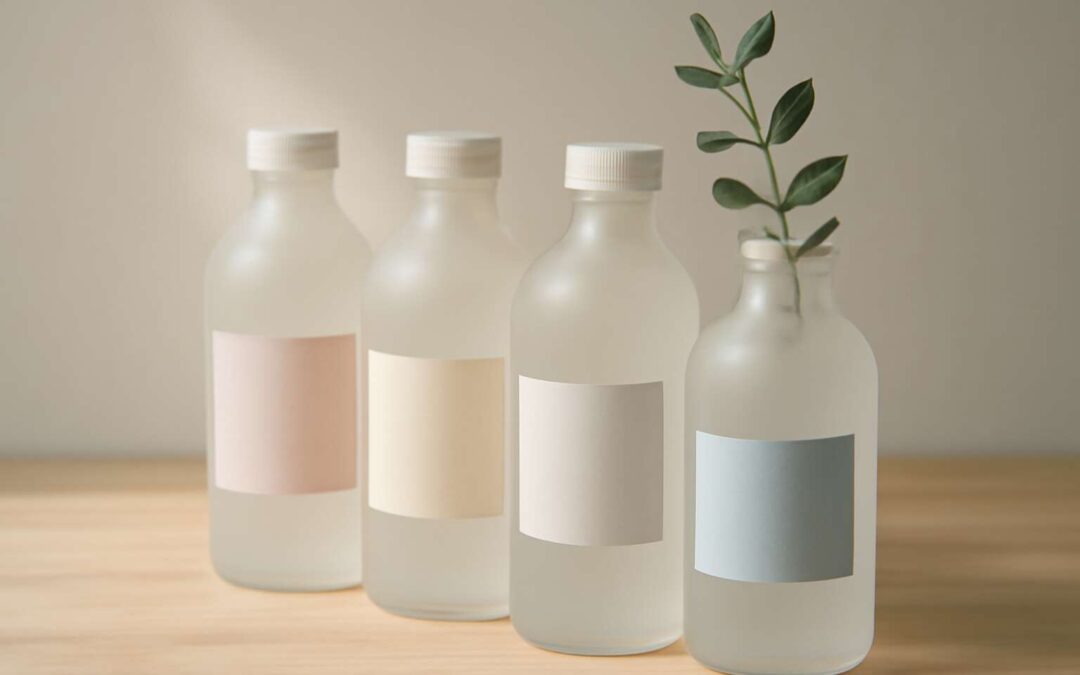
Understanding Frosted Finishes on Glass Bottles
What is a frosted finish and its visual appeal
Across South Africa’s retail shelves, 68% of shoppers recall products with frosting glass bottles longer than their crystal-clear rivals. A frosting finish on glass creates a soft, matte veil, tempering glare and letting label color breathe with quiet authority. Frosting glass bottles deliver a visual balance: legibility for labels, atmosphere for brands, and welcomed tactility in hand.
- Subtle opacity diffuses light for a premium look
- Matte surface reduces glare while keeping label readability
- Fingerprints glide off more easily than slick glass
From boutique spirits to skincare lines, the finish signals a craft-driven story. I’ve watched how that quiet pause in a shopper’s grip nudges trust and curiosity, turning a simple bottle into a tactile ambassador for the brand.
Common methods to achieve a frosted look
Understanding frosted finishes on glass bottles starts with the eye and the touch. The effect is a soft, light-diffusing veil that lowers glare while keeping typography legible. In practice, brands lean into a reserved, craft-driven look that communicates quality without shouting!
- Acid-etching, where chemicals create a roughened microsurface that scatters light.
- Sandblasting, using controlled particulate impact to dull the surface.
- Spray frosted coatings, a spray-applied layer that mimics a micro-etched texture and can be tuned for opacity.
These techniques suit South African markets that prize tactile storytelling on shelves, quietly elevating label rhythm and product presence.
Pros and cons of frosted glass for bottles
On South Africa’s sunlit shelves, frosted glass bottles stand with quiet confidence. I’ve watched that diffused glow soften competing labels, the way a frosted finish lowers glare and keeps typography legible; that balance is the core of frosting glass bottles in practice. It invites the eye to linger and the hand to explore texture.
Understanding the upside, here are the advantages that tip the scale toward a frosted aesthetic:
- Refined, premium aesthetic that resonates with discerning buyers
- Diffused light preserves label contrast across lighting conditions
- Consistent texture helps establish a steady shelf rhythm
Yet the choice isn’t free of caveats. Frosted finishes can add cost and require specialized downstream steps, and some hues may shift the perceived product color slightly under certain lighting. If not cared for in display, the matte surface can show micro-scratches. For brands weighing frosting glass bottles, the trade-off is clear: aesthetic reward against production nuance.
Practical considerations for contents and labeling
Across South Africa’s sunlit shelves, frosting glass bottles catch the eye with a quiet glow. The finish softens glare and invites closer inspection of the label. On this retail stage, the visuals must harmonize with legibility and brand personality from production to display!
Understanding practical considerations for contents and labeling requires respect for both material and message. Consider how product viscosity, aroma, or surface oils interact with the matte surface; and how your label’s typography holds under varied lighting.
- Contents compatibility and fill line visibility
- Label legibility under diffuse glare and on textured glass
- Storage, handling, and finish resilience to micro-scratches
Frosting glass bottles remain a refined choice that rewards restrained presentation. The frosted texture invites touch while the contents’ truth should travel clearly to the consumer’s imagination.
Techniques and Methods for Frosted Finishes
Mechanical frosting options
Texture on packaging shapes decisions in seconds—studies suggest shoppers form impressions in about seven seconds. Frosted finishes on glass bottles signal quality without shouting, making frosting glass bottles a subtle yet powerful branding tool.
Mechanical frosting options deliver repeatable results across lines. Bead blasting and sandblasting diffuse light evenly, producing a soft, matte surface that hides fingerprints and keeps labels legible.
- Bead blasting
- Sandblasting
- Controlled micro-abrasion
Each method offers a different diffusion depth, so pilot assessments help align durability with product contents and wash cycles. Avoid harsh textures that abrade labels, and factor in batch-to-batch consistency for frosting glass bottles.
Chemical etching and acid-based techniques
Seven seconds. That’s the window a shopper uses to judge a bottle’s premium feel. Frosting glass bottles signal quiet luxury at a glance.
Chemical etching uses controlled acid baths to gently dissolve a micro-layer of glass, producing deeper, more uniform diffusion than mechanical methods. Acid-based techniques offer precise depth control, keeping branding elements legible through repeated handling and wash cycles. Safety and material compatibility steer every bath choice.
- Controlled diffusion depth
- Batch-to-batch consistency
- Preserved label readability after washing
For brands seeking premium perception, chemical etching can align with glass chemistry and shape variations, offering a tailored frost without overpowering branding. That balance matters!
Spray and paint-on frost effects
Seven seconds is all the eye needs to decide: frosting glass bottles whisper quiet luxury on South Africa’s bustling shelves. Spray and paint-on frost effects offer a spectrum—from delicate diffusion to satin opacity—while preserving label readability and the tactile elegance your brand promises with every touch.
Spray approaches harness controlled diffusion and fast-set formulations. Here’s how it plays out:
- aerosol frost sprays for quick coverage
- airbrushing to build gradients and micro-contrast
- masking and stenciling to guard logos and text
Paint-on frost effects rely on deliberate brushwork, gel-based or UV-curable frost coatings, and patient layering. When applied with a steady hand, they deliver even texture without dulling branding, yielding a refined frosting glass bottles finish that sustains through handling and washing.
Laser and decorative etching possibilities
“Frosting glass bottles is the quiet luxury of a crowded market,” says a leading South African glass designer, and the sentiment travels everywhere our shelves reach. When frosting meets laser etching, precision becomes poetry—crisp logos, soft halos, and micro-contrasts that hold fast to the brand story without dulling the surface. Laser and decorative etching possibilities carve light and memory into the frosted canvas, turning a simple bottle into a tactile memento. Here are avenues to consider:
- Fine-line laser engraving for minute branding
- Geometric or botanical motifs etched into the frosted surface
- Select area etching to protect logos while revealing the glass
Beyond laser, decorative etching can harmonize with structural frosting to yield layered depth—the kind of finish that endures handling and washing without compromising the frosting glass bottles’ identity.
Safety and waste considerations
In South Africa bottling lines, safer frosting finishes can slash waste by about 30% while preserving visual impact. Techniques and methods for frosted finishes prioritise consistent texture, clean lines, and repeatable results on frosting glass bottles that endure daily handling.
Safety and waste are not afterthoughts! Here’s a quick framework:
- Containment and PPE to protect workers from dust and chemical exposures
- Water and solvent efficiency, with recycling loops for rinse streams
- Waste management aligned to local regulations, with skimming, filtration, and responsible disposal
When process discipline is balanced with smart design, frosting glass bottles stay pristine through warehousing, transport, and washing—without compromising the frosted identity.
Design and Application Ideas
Branding with frosted finishes
Branding with frosted finishes is the quiet magic that transforms ordinary glass into a stage for story. A recent stat says premium perception rises when a bottle bears tactile frost—memory that lingers after the first glance. I’ve seen it on shelves from Cape Town to Joburg.
Design and application ideas weave texture with typography on frosting glass bottles. Let light caress the surface; pair bold, high-contrast lettering with soft, matte translucence. Use restrained color palettes to let the frost tell the narrative.
- Emboldened typography in high-contrast ink for legibility against the frost
- Delicate embossed or etched motifs that catch light as the bottle rotates
- Seasonal color accents through labels or caps that complement the frosted finish
Across South Africa’s markets, brands are telling local stories with frosted glass, where craft meets clarity and the bottle becomes a canvas for heritage and innovation.
Color accents and contrast on frosted surfaces
South Africa’s shelves are louder than ever, and one stat lights the way: premium brands that pair bold color with tactile frost attract 62% more attention at first glance. That magic travels to frosting glass bottles, where color accents and contrast narrate a story before the cap is touched.
Three color psychology moves on frosted surfaces.
- Bold typography in high-contrast inks to carve legibility into the soft satin of the frost.
- Delicate embossing or etched motifs catch light as the bottle rotates.
- Seasonal color accents on labels or caps that harmonize with the frost.
Across South Africa’s markets, brands blend craft with clarity; the bottle becomes a canvas for heritage and innovation.
Layering textures and patterns
The South African shelf roars with color, and one stat lights the way: premium brands that pair bold color with tactile frost attract 62% more attention at first glance. Designing with frosting glass bottles becomes a quiet drama—layered textures and subtle patterns that turn the surface into a narrative, inviting the eye to linger before a cap is touched!
Textures layer depth without shouting, whispering through soft satin overlays; delicate etched lace or micro-patterns that catch the light as the bottle turns; and grainy speckling to create tactile depth.
- soft satin overlays that whisper rather than shout
- delicate etched lace or micro-patterns that catch the light as the bottle turns
- grainy speckling to create tactile depth
Across South Africa, packaging becomes a map of heritage and innovation—bottles that reflect craft, light, and the rhythm of daily life.
Labeling strategies for frosted finishes
In a bold South African market study, brands that pair subtle frosting glass bottles with deliberate labeling grab 62% more first-glance attention. Design and labeling strategies for frosted finishes invite a quiet drama: text, texture, and light do the telling before a cap is touched.
Labeling ideas that harmonize with frost can transform ordinary bottles into storytellers.
- Sleeves and wrap-around labels that glide over frosted curves
- Contrast inks and metallic foils for legibility without glare
- Subtle deboss or emboss on frosted panels for tactile depth
Across South Africa, these strategies echo heritage and modern craft, letting the frosted surface glow with quiet sophistication as the story of your brand unfolds in light and touch.
DIY Process and Safety
Material safety and PPE
“Texture buys attention,” says a packaging designer. frosting glass bottles catch the eye and soften glare, lending a quiet elegance to any line.
In a South African workshop, safety comes first. I start with PPE and a clean bench. Safety first—work in a well-ventilated space and wear nitrile gloves, splash goggles, and a respirator. An apron keeps clothing clean, and have a first-aid kit nearby. Check the SDS and choose coatings safe for glass when liquids are involved.
Prep begins with a thorough cleanse and thorough dry. Apply the frost with steady, even strokes, keeping skin and lids away from fumes. Allow full cure in a dust-free area, then inspect for uniformity and clarity.
Surface prep and cleaning
DIY frosting glass bottles is a quiet art that rewards patience. In South Africa’s studios, the process begins long before any coating is touched: surface prep and cleaning lay the groundwork for an even, glass-smooth finish. I believe a prep that’s thorough reduces glare and reveals the frost’s subtle depth.
Safety surface prep and cleaning matter as much as the finish itself. Work in a tidy, well-ventilated space, and keep the bench free of dust that could mar texture. To support safe handling, consider these essentials:
- Nitrile gloves
- Splash goggles
- Respirator or mask
- Apron and a nearby first-aid kit
With a clean slab and precise control, the glass dries free of lint and oils, ready for an even frost.
Step-by-step process for a home frost finish
Patience breathes life into glass. In South Africa’s studios, the DIY frosting of glass bottles begins with intention, not haste. A quiet ritual unfolds as you craft a steady, glass-smooth frost that mirrors the depth of meaning held in every bottle.
- Setting up a clean, dust-free workspace, with PPE in place.
- Wipe surfaces with a lint-free cloth, ensuring they are free of oils; don gloves and goggles for safety.
- Mask any logos or non-frost areas with painter’s tape for clean edges.
- Apply a thin, even coat of frost medium; spray or brush slowly in short passes.
- Inspect under good light; add a second veil if needed for depth.
- Let dry fully in a well-ventilated space before handling.
The finish elevates frosting glass bottles from craft to quiet statement, a result born of method, patience, and a respect for glass.
Post-treatment care and inspection
In South Africa, studios report that the visual drama of a frosted veil is as much about aftercare as the initial stroke of frost. The moment the light slides across the glass, you sense a quiet pact between patience and glass—an art that elevates simple bottles into whispered artifacts. Frosting glass bottles isn’t magic; it’s a disciplined ritual that rewards steady breath and a calm hand.
Post-treatment care and inspection matter: allow full cure in a well-ventilated space, away from dust; once dry, handle with clean gloves to avoid fingerprinting; inspect edges, uniformity, and depth under bright light; any residue or run? rework with gentle, precise passes when touch-ups are needed.
- Verify complete cure before handling or storage
- Store upright in a dust-free area, away from direct sunlight
- Document any anomalies for future projects
Maintenance, Care, and Use Cases
Cleaning and storage guidelines
Shelf drama matters: frost-coated bottles pull the eye in nine of ten shelf comparisons! That depth signals quality before a single label is read. Proper care isn’t mystical; it’s steady, everyday attention that keeps the frost intact and the labels crisp.
Maintenance basics keep the finish looking polished in busy kitchens and retail spaces alike.
- Wash with warm water and mild soap; avoid abrasive scrubbers.
- Rinse thoroughly and dry using a lint-free cloth.
- Store upright in a cool, dry place away from direct sunlight.
Use cases to spotlight versatility: From boutique oils and artisanal sauces to cosmetic serums, frosting glass bottles elevate presentation while preserving readability of labels. In South Africa’s vibrant retail scene, the frosted finish adds a premium touch on shelves and in display cabinets. Balanced with clean storage practices, the look remains consistently sharp.
Reusability and durability considerations
In the rhythm of a busy kitchen and crowded shelves, the frost finish is more than decoration—it’s a signal of resilience. Maintenance becomes part of the brand’s narrative: a steady, unflashy discipline that keeps texture even and labels crisp despite constant handling.
For frosting glass bottles, this resilience relies on gentle treatment and regular checks that prevent micro-scratches from ruining the sheen. When the craft is kept mindful, the finish stays even, and smudges fade into the background rather than shouting for attention.
Use cases across South Africa’s retail scene—boutique oils, artisanal sauces, and cosmetic serums—show how reusability matters. A durable frost finish supports reuse, shelving rotation, and premium display without losing readability or charm.
Use-case scenarios for packaging and gifting
Across South Africa’s bustling shelves, frost-kissed packaging can lift perceived value by as much as 30% at first glance. Frosting glass bottles do more than cradle their contents—they summon a quiet confidence that invites careful handling and long-lasting charm.
Maintenance is mindful ritual. Gentle treatment and regular checks prevent micro-scratches from dulling the sheen. Clean with a soft microfiber cloth, avoid abrasive cleaners, and store away from direct sunlight. Inspect for wear weekly and let the label loyalty remain crisp.
- Gentle handling preserves the frost sheen
- Regular visual checks protect readability and finish
- Thoughtful storage supports premium display and reusability
Use-case scenarios for packaging and gifting below illustrate the reach.
- Curated gift sets for boutique retailers
- Seasonal lines in premium displays
- Branded corporate gifts with frost accents
Troubleshooting common issues
Across South Africa’s shelves, frost finishes can lift perceived value by up to 30% at first glance. Maintenance is a mindful ritual, with gentle handling and regular checks preventing micro-scratches from dulling the sheen on frosting glass bottles. Clean with a soft microfiber cloth, store away from direct sunlight, and inspect weekly to keep the label crisp.
Common issues to note:
- Subtle micro-scratches that dull the sheen
- Hazing or uneven frost caused by rapid temperature changes
- Label peeling or readability challenges on textured surfaces
In the South African market, use cases for this finish emerge in curated gift sets, premium seasonal displays, and branded corporate gifts with frost accents, all designed to elevate presentation and preserve reusability.