
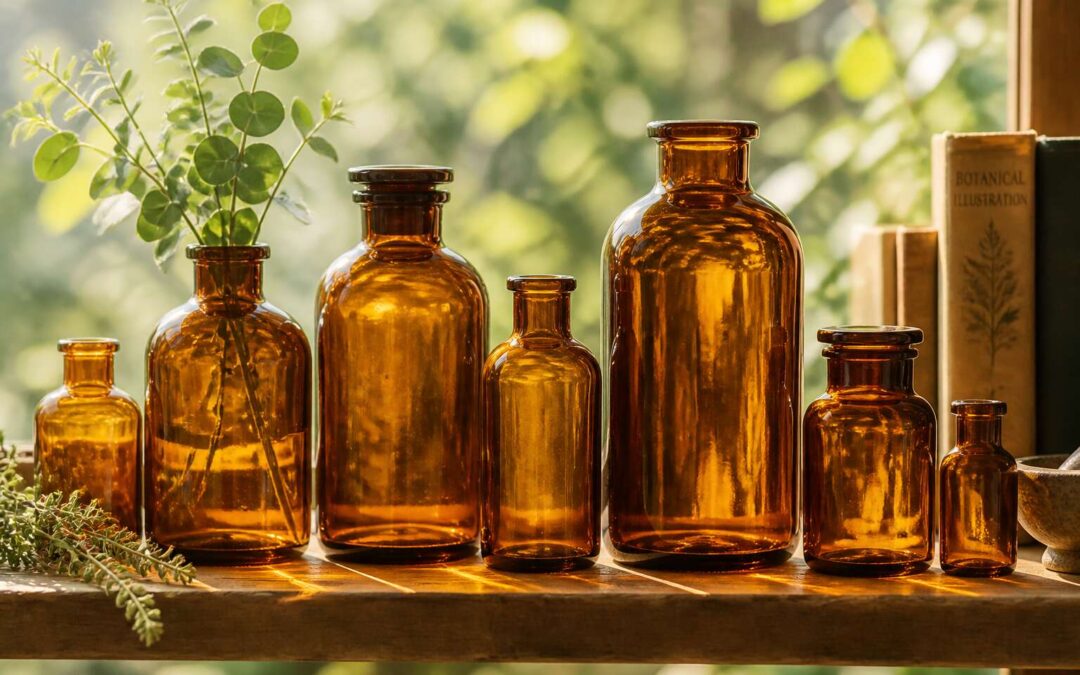
The Science Behind Amber Glass Protection
UV Light Filtering Properties
Amber glass blocks the specific wavelengths of light that cause photochemical damage. Ultraviolet radiation, particularly UV-A between 320 and 400 nanometers, triggers oxidation that breaks down essential oils, vitamins, and pharmaceutical compounds. The iron oxide and sulfur molecules embedded in amber glass absorb this radiation and dissipate it as harmless heat. That is why amber glass bottles are the standard for packaging light-sensitive products. Independent tests show they filter out roughly 98 percent of UV rays in the damaging range, which explains their dominance in the South African herbal remedy market.
Visible light also degrades certain compounds, though at a slower rate than UV. Amber glass dulls that spectrum too, extending the shelf life of tinctures and cosmetic serums. The protection is physical, not chemical, which means it never wears off or leaches into the contents.
- UV-A and UV-B are absorbed by the iron oxide in the glass matrix
- Visible light is dimmed to reduce photochemical reactions
- The material itself provides continuous, maintenance-free shielding
This passive defence matters for small batch producers who lack climate controlled warehousing. The bottle itself becomes the first line of preservation.
How Light Degrades Product Potency
Let’s be blunt: light is a chemical enemy hiding in plain sight. When your tincture sits on a sunny shelf, photodegradation quietly rewrites its molecular structure. The process is called photolysis, and it does not care how carefully you sourced your herbs.
The breakdown typically follows a predictable pattern:
- Photons strike the product and excite its molecules
- Excited molecules form free radicals that attack active compounds
- Beneficial ingredients fragment into inert or even irritating byproducts
Your carefully formulated valerian root extract can lose measurable potency within weeks of light exposure. The terpenes that give your product its therapeutic signature are especially fragile, they simply evaporate or oxidize into something unrecognizable. Meanwhile, cosmetic serums suffer their own quiet tragedy as vitamins degrade and oils turn rancid.
This is why amber glass bottles have earned their reputation among serious formulators. The glass does not merely slow down deterioration, it changes the game entirely by intercepting the energy before it reaches your product. For South African producers working in our famously bright climate, this protection is not optional, it is essential to maintaining consistent quality batch after batch.
We have seen what happens when producers ignore this basic principle. Clear glass displays the product beautifully, but every golden hour in the shop window is another step toward a weaker, less effective final product.
Comparing Amber to Other Glass Colors
Walk into any serious formulation lab and you will notice something immediately. Amber bottles outnumber everything else, and that is not a stylistic preference. Amber glass owes its color to iron oxide and sulfur added during manufacturing. That simple chemical addition transforms ordinary silica into a barrier against photodegradation. The glass absorbs the damaging wavelengths while still letting you check the liquid inside for clarity.
Compare that to other glass colors and the difference becomes obvious!
- Clear glass offers zero protection against light damage.
- Green glass filters some UV but allows visible light through.
- Blue glass looks striking but performs barely better than clear.
South African producers face an unforgiving sun, and that performance gap explains why amber glass bottles appear so frequently in local pharmaceutical and cosmetic supply chains. Honestly, once you understand the spectral data, choosing anything else feels shortsighted.
The Role of Iron Oxide in Glass
Most people assume amber glass is simply brown because someone thought it looked classy. The truth is a chemistry lesson. Iron oxide and sulfur are added to the sand before melting, and they pull off a neat trick: the glass becomes a selective filter. It lets you see the liquid inside while absorbing the wavelengths that destroy active ingredients. That selective absorption is why amber glass bottles dominate South African pharmaceutical shelves.
- Iron oxide blocks UV light in the 300-400 nm range.
- Sulfur helps the glass absorb visible light too.
- The combination creates a stable barrier, no coatings required.
Next time a supplier offers clear glass for a sun-exposed climate, remember the iron oxide is the active agent. That is why amber glass bottles remain the rational choice for anyone serious about potency.
Industries That Rely on Amber Glass Bottles
Pharmaceuticals and Medicine Storage
The South African Medicines Control Council requires certain liquid medications to be stored in light-protective packaging. In a country with intense, persistent sunshine, the integrity of medicine can be compromised by environmental factors. Compliance with pharmacopoeial standards is one matter; maintaining chemical stability is the other, and both converge in the choice of the container.
This is why amber glass bottles remain the standard for dispensing tinctures and oral solutions. The material is inert, so it will not chemically interact with its contents, and its thick walls provide a barrier against moisture. For a pharmacist, the seal is a promise. For a patient, measuring a dose from that familiar brown vessel is an assurance of quality.
- Proper medicine storage relies on controlled temperature
- Relative humidity is monitored to prevent degradation
- Container integrity preserves dose accuracy
These considerations are practical. A liquid that changes color or develops sediment has undergone a transformation, and the bottle can delay or accelerate that process. The social nuance is curious: we receive prescriptions in plastic bags, yet the most trusted products arrive in glass. That choice, made by manufacturers who understand stability, is the quiet reason why amber glass bottles still matter in South African medicine cabinets.
Essential Oils and Aromatherapy
The essential oil trade in South Africa faces a direct problem: sunlight. Oils like lavender and tea tree carry their potency in volatile molecules that shift and evaporate when exposed to light. Fill a clear vial with rose otto and leave it on a shelf in Johannesburg. Within weeks, the scent fades. This is why amber glass bottles have become the standard for aromatherapy producers.
The container does more than block rays. Its thick walls slow oxygen exchange and keep moisture out. For a small distiller in the Cape, this means the difference between a batch that sells and one that disappoints. I have seen this play out in my own collection.
Some oils need extra consideration:
- Citrus oils are especially sensitive to photodegradation.
- Resin oils like frankincense thicken with age and need stable containers.
- Carrier oils, while less volatile, still benefit from reduced light exposure.
Aromatherapists trust the brown glass because it offers measurable protection. They have measured the difference.
Craft Beer and Beverage Preservation
Craft brewers in Durban and Cape Town know the enemy is light itself. Clear glass lets in the very wavelengths that skunk a hoppy lager within hours. This is why amber glass bottles have become the standard for any brewery serious about shelf life. The brown tint filters the spectrum that triggers photodegradation in hop compounds.
Beyond beer, small batch juice producers and kombucha makers face the same adversary. Their products lose colour and flavour when light intrudes. I have tasted the difference myself, and it is stark.
- Hoppy beers degrade fastest under visible light.
- Fruit juices lose vitamin content through clear glass.
- Kombucha cultures remain stable in dark vessels.
Every brewer who has tasted a light struck batch understands the value immediately!
Cannabis and CBD Product Packaging
Cannabis cultivators in the Western Cape track photodegradation carefully. Within days, light strips volatile terpenes from resinous trichomes, leaving oils flat and lifeless. This is why amber glass bottles have become the standard for CBD tinctures and cannabis extracts. The brown glass absorbs specific wavelengths that would otherwise dismantle THC and CBD molecules. Inspecting dispensary shelves, I see clear containers holding faded oils. Amber preserves the deep emerald hue and aromatic complexity. Threats include:
- UV radiation breaking down cannabinoids
- Visible light oxidising terpenes
- Heat accelerating resin degradation
Cape Town producers now demand amber for every droplet. The bottle blocks daylight. That is its purpose.
Skincare and Cosmetic Formulas
Skincare formulators know that a product’s enemy is often the shine on the shop shelf. Retinol, vitamin C, and bakuchiol lose potency when exposed to daylight. A serum that looks beautiful in clear glass may be chemically weaker by the time it reaches your bathroom. This is why amber glass bottles have become the standard for stable cosmetic formulas.
Photooxidation is not the only threat. Botanical actives react to visible light, producing free radicals that shift pH levels. A cream can change colour, separate, or emit a rancid odour. Amber glass stops those reactions before they begin. It also signals a serious commitment to efficacy.
Common actives that demand this packaging:
- Retinoids, which degrade into irritants under UV light
- Vitamin C derivatives that brown when exposed
- Plant extracts that lose antioxidant value quickly
Environmental and Economic Benefits of Amber Glass
Recyclability and Circular Economy
A single amber glass bottle can return to the furnace again and again, never losing its integrity. This endless loop reduces mining for raw materials and cuts carbon emissions. In South Africa, where waste management strains many municipalities, each returned bottle eases that pressure.
The economics favor this cycle as well. Collecting and crushing used amber glass consumes less energy than producing virgin glass. Consider what this means locally:
- Lower energy costs for manufacturers
- Fewer raw material imports
- Stable demand for recyclers
That is why amber glass bottles offer a tangible path toward a circular economy, not as a slogan but as a working system.
Reusability for Consumers
South African households face rising prices on nearly everything. Reusing a single amber glass bottle turns packaging waste into a durable storage asset. This explains why amber glass bottles stay useful long after the original product is gone. They hold homemade tinctures, bulk-bought olive oil, or cleaning solutions for years. Glass resists staining and odour absorption, so a bottle cleans up quickly between uses.
The maths is simple, and the savings are tangible. Every refill avoids manufacturing a new plastic container. Every year of reuse postpones the energy-intensive melting process that defines glass production. Consumers who refill at bulk stores cut packaging costs directly while trimming household waste.
- Preserve light-sensitive pantry staples like vinegar or vanilla extract
- Store homemade salves and infusions without chemical leaching
- Refill at local zero-waste shops to save money per gram
That is why amber glass bottles remain valuable on any shelf, refill after refill.
Cost-Effectiveness Over Time
The most expensive amber glass bottle you will ever buy is still cheaper than a decade of plastic replacements. In South Africa, where packaging prices climb steadily, the arithmetic becomes hard to ignore.
Glass does not wear out the way plastic does. It resists staining, odour absorption, and chemical degradation. A bottle bought once in Durban can still be in service ten years later, while disposable containers are purchased again and again.
- Each reuse avoids the compounding energy cost of new container manufacturing
- Every year of service postpones the melting process that defines glass production
- Longer lifespans divert mass from municipal waste streams
I keep reaching for amber for exactly this reason. The upfront price is a deposit, not a loss. That is why amber glass bottles deliver lasting value to both a household budget and the planet.
Reducing Chemical Leaching Risks
A plastic bottle left in a hot car is a chemistry experiment no one signed up for. Additives migrate into your oils and tonics without warning. Amber glass stops that transfer completely. Its inert surface does not react with acidic or alkaline contents.
- Glass prevents plastic monomers from reaching your product
- No leaching means fewer spoiled batches and less household waste
- Bottles retain value for years, sparing your budget from repeat purchases
This is why amber glass bottles matter in South Africa. The economic benefit arrives quietly: each glass purchase protects your health and your wallet simultaneously. That is a rare form of civic courtesy in modern packaging.
Choosing the Right Amber Glass Bottle for Your Product
Glass Thickness and Durability
Producers often choose amber glass for its protective tint, but the physical thickness of the wall decides whether a bottle survives the shelf, the journey, and the consumer’s grip. A thin vessel fails when machines cap it with force or when temperature swings occur during delivery. Heavier glass withstands these pressures and supports products with thicker viscosity that require vigorous shaking before use.
Examining the base and shoulder matters, because those zones absorb the sharpest blows. Uniform thickness across the side prevents weak points. For the 100ml and 250ml bottles popular in South African skincare lines, a heavier gauge cuts the rate of in-transit breakage. Ask suppliers for samples, then run your own drop test.
Review these features:
- Side and bottom wall thickness
- Neck rigidity under capping torque
- Batch consistency from one unit to the next
That is why amber glass bottles deserve your attention only when their construction matches their colour.
Neck Finishes and Closures
The neck finish is the quiet gatekeeper of your formula. A 20mm neck suits essential oil droppers, while a 24mm neck accommodates lotion pumps with wider dip tubes. Matching the thread type matters as much as the orifice. South African humidity can warp cheap plastic closures, so confirm that your cap liner resists moisture and chemical migration.
Consider the pouring behaviour. A narrow neck creates a slow, controlled drip for high-value serums. A wider neck allows thicker creams to exit without sputtering. This is why amber glass bottles earn their place in premium skincare; the closure system determines whether the customer gets a satisfying experience or a sticky mess.
- Crimp neck for aerosol triggers
- Continuous thread for tamper-evident caps
- Ribbed neck for easy grip during opening
Test the torque. A cap that is too tight frustrates elderly hands, and one that is too loose invites leakage in transit. The finish is where engineering meets daily ritual.
Light Protection Variations
Different products need different kinds of darkness. Light protection variations matter more than most buyers realise. The spectrum of amber glass ranges from light honey to near black brown, and each shade blocks a different wavelength range. A pale amber bottle suits short lived products kept indoors. A deep amber works for long term storage or for goods transported across South Africa in open truck beds.
Some glass makers offer coated flint glass that mimics the colour, but it still does not match the full spectrum performance of true amber. This is why amber glass bottles hold their position in packaging decisions. They give predictable, measurable protection without guesswork. Your formula deserves that certainty, not a gamble.
Customization and Branding Opportunities
South Africa’s summer UV index can reach extreme levels, so your packaging choice deserves careful thought. Not every amber bottle delivers the same protection, and not every brand wants the same look.
Choosing the right amber glass bottle involves matching the glass tone to your product’s lifespan and your market’s habits. A pale hue works for fast moving goods; a deep brown suits long storage. After selection, customization turns practicality into presence. You can emboss your logo, alter the neck, or adjust the finish.
- Etch glass with a pattern.
- Select a matte coating.
- Pair with custom droppers.
These options let you claim ownership of the design. That is why amber glass bottles outperform generic alternatives for brands that value both function and recognition.
Sourcing Quality Suppliers
A beautiful amber bottle means nothing if the supplier misses the shipping window. The glass must travel from factory to fill line without surprises. South African brands face long logistics routes, so supplier reliability matters as much as the glass itself. This is why amber glass bottles demand more verification than a quick online order.
Request samples from multiple production runs and confirm the neck finish matches your capping equipment. Ask about iron oxide content, wall thickness tolerance, and batch consistency. A reputable supplier will share lab reports without hesitation!
- Verify whether the glass is domestically produced or imported
- Check lead times during peak summer production
- Inspect pallet packing for transit damage
Every step affects the final product. The right supplier anticipates delays, communicates clearly, and understands local humidity conditions. That knowledge protects your investment before the first drop touches the glass.
Common Misconceptions About Amber Glass
Does Amber Glass Block All UV Light?
Many buyers assume a brown bottle stops all light damage. It does not. Standard amber blocks about 90% of UVB rays but permits a portion of UVA wavelengths to pass through. That lingering sliver explains why amber glass bottles often arrive with inner liners or opaque outer cartons.
Consider what that means for your product:
- UVA exposure can degrade light sensitive formulas over months, not days
- Visible colour shifts or scent drift indicate the glass has been outpaced
- Direct sunlight presses far harder on the bottle than indoor lighting
The misconception persists because amber clearly outperforms clear or green glass. Full spectrum immunity remains a myth, and brands relying solely on the tint may face premature spoilage.
Amber Glass vs. Cobalt Blue for Photosensitivity
One prevailing mistake is to crown amber as the single protector against all photodegradation. Cobalt blue does not block UV as efficiently, but it absorbs yellow light that amber lets through. That distinction matters for actives triggered by visible spectra.
- Amber scatters UVB rays with roughly 90% efficiency.
- Cobalt blue filters amber light around 580 nanometers.
I often see formulators overlook the spectrum, not the color. The real question is why amber glass bottles dominate shelves. They deliver balanced protection for most formulas, yet photosensitive products require matching the tint to the offending wavelength. Cobalt blue suits those sensitive to longwave light, not shortwave. Neither offers immunity, just a tailored defense.
Is Darker Amber Always Better?
Darker amber looks more protective. It is not. The depth of colour in amber glass comes from iron oxide, but once the glass reaches a certain opacity, extra darkness adds little to UV defence. I have seen buyers request darker samples and pay more for zero performance gain. Glass chemistry and thickness matter more than shade.
This is why amber glass bottles in reputable supply chains follow strict colour standards. An overly dark tint can signal off-spec production, where raw material variation altered the hue without improving performance. The real selection criterion is measured transmittance.
Here is what darker amber actually changes:
- Perception of prestige on a shelf, not measurable photoprotection.
- Higher iron content can alter thermal tolerance in some cases.
- No spectral filtering shift once standard amber levels are met.
The transmittance curve tells the real story.
Are Plastic Amber Bottles Just as Effective?
Some buyers assume an amber plastic bottle is just a lighter version of the real thing. The colour looks familiar, but the mechanism is different. Plastic amber uses a dye suspended in polymer, whereas glass amber gets its colour from iron oxide fused into the silica structure. UV defence in glass is a bulk property. In plastic, it is a surface game that shifts as the material ages.
Warehouse lighting alone can degrade plastic tints over months. The glass bottle beside it holds its curve. Here is what plastic amber actually delivers:
- Cheaper upfront cost and a lighter shipping weight.
- A shade that mimics glass until it fades.
- No guarantee of consistent transmittance across shelf life.
This is exactly why amber glass bottles remain the reference standard for photosensitive products, and why South African manufacturers should treat plastic amber as a compromise, not a substitute.